If you have read the beginner guide, you already know the four hints: numbers that fit only one way, corners, pieces that squeeze their neighbors, and cells only one number can reach. Normal boards grow to 8 x 8 and have bigger numbers, so a number can often reach a cell in two or three ways and you cannot place it yet. Let's solve Normal 713 together and see what to do then.
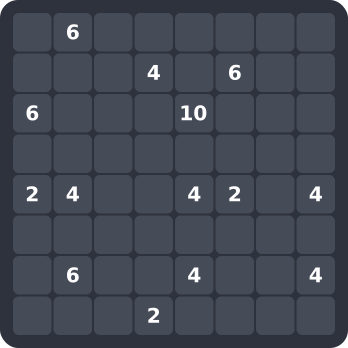
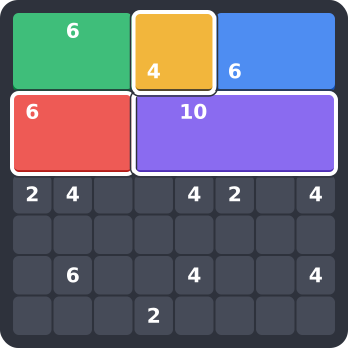
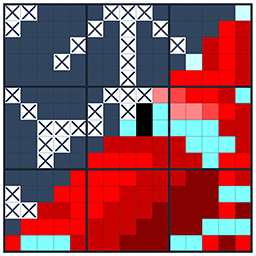
Normal 713. An 8 x 8 board with 14 numbers, so 14 rectangles.
Hint 1: Remember where a number has to reach
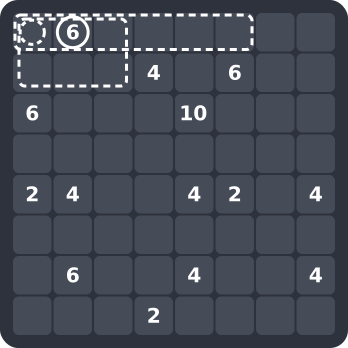
Only the 6 in the top row can reach the top-left corner. Any other number would have to cover another number to get there. The top 6 still has two shapes that cover the corner (dashed): the top row up to the sixth column, or a 2 x 3 block.
You cannot place anything yet, but you have learned something: this 6 goes to the corner. Shapes that miss the corner are gone, even before you know the answer. Keep that in mind and move on. It will pay off in two moves.
Hint 2: Big numbers have corners too
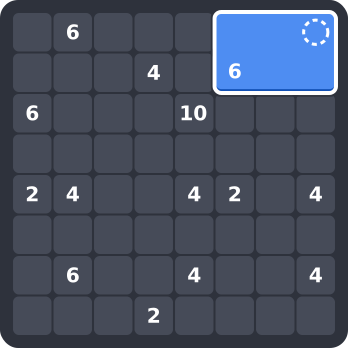
Only the 6 in the second row can reach the top-right corner. It has five shapes, but just one of them covers the corner: 2 x 3 at the top right.
This is the corner hint from the beginner guide. On Normal boards it often lands on a big number with many shapes, and that is exactly when it helps most: five choices become one.
Hint 3: Use what you remembered
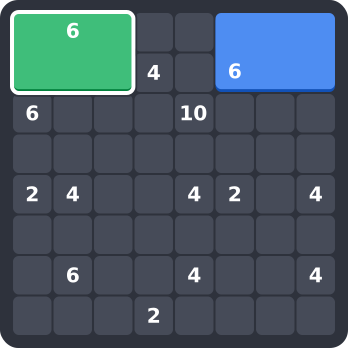
Back to the 6 at the top left. Of its two corner shapes, the long one along the top row now runs into the blue piece. So it is the 2 x 3 block.
Each thing you remember cuts a number's choices. When a new piece lands next to that number, check again: the short list may now be down to one.
The rest: one shape at a time
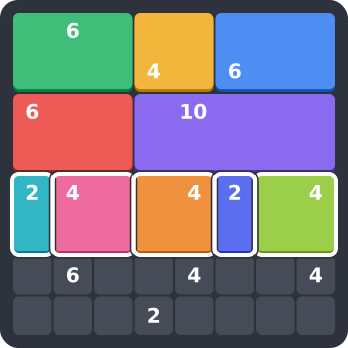
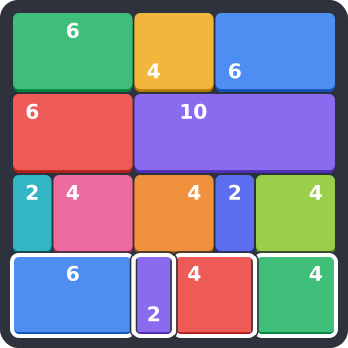
4-6. The 6 under the green piece, the 10 and the 4 at the top each have one shape left.7-11. The fifth and sixth rows fill in, one piece at a time.12-15. Then the bottom two rows.
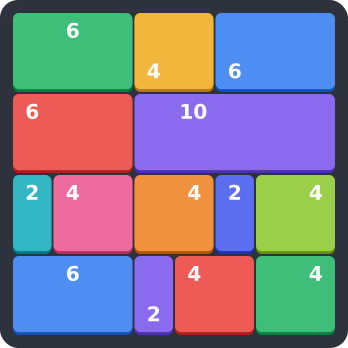
Solved: 14 rectangles, one number in each, and every cell covered.
When a Normal board gets stuck
Check the corners first, even for big numbers with many shapes (Hint 2).
If only one number can reach a cell but in several ways, remember it (Hint 1).
After every piece, look again at the numbers you are remembering (Hint 3).
Pieces squeeze their neighbors, so the end of a board usually goes fast.

 Kaku The JoyPlus Soft Planning Team