How to Solve Ten Link: 4 Beginner Hints (Daily Challenge 10.3)
 Ten Link The JoyPlus Soft Planning Team
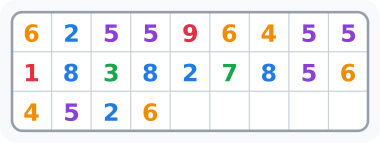
Ten Link looks like a quick matching game: find two numbers that are the same or add up to ten, and clear them. The catch is that order matters. Clear the wrong pair early and a few moves later the board runs out of pairs, so you have to add more numbers. Let's play one real board together, the Daily Challenge for October 3, 2026. Every player gets exactly this board, so you can open it in the game and follow along. Four hints come up along the way, in the order you need them.
The rules
- The board is nine squares wide. Two numbers make a pair when they are the same (6 and 6) or add up to ten (4 and 6).
- The path between them has to be open: a straight line across, down or diagonally, or reading order, left to right and on from the end of one row to the start of the next. Cleared squares do not block the path.
- Cleared numbers turn gray. When a whole row is cleared, it disappears and the rows below move up.
- Clear every number to finish. When no pairs are left, the + button (ADD) copies the remaining numbers onto the end of the board.
Tap a number and then its partner, or drag from one to the other. Daily Challenge boards open one day at a time from the 1st of the month, and past months stay playable, so you can find this board under October in the calendar. You can add numbers as often as you like in the Daily Challenge, but every ADD makes the board longer, so the real goal is to finish without it.
Hint 1: Same color, always a pair
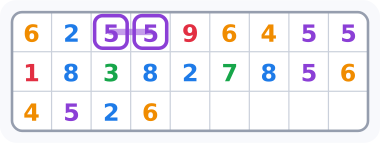
Ten Link colors every number by the group it can pair with: red for 1 and 9, blue for 2 and 8, green for 3 and 7, orange for 4 and 6, and purple for 5. Two numbers of the same color always fit, whether they are equal or make ten. So you never have to add anything up. Look for the same color, then ask just one question: is the path open?
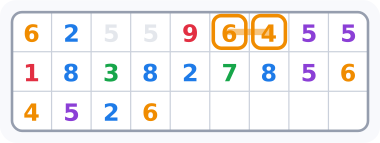
Hint 2: Be careful with pairs stacked on top of each other
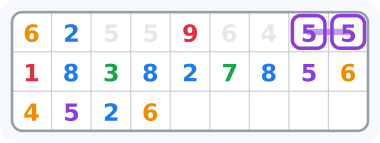
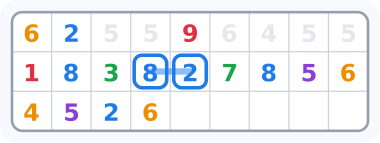
Now look at the 5 near the end of the top row. It has two partners: the 5 right next to it and the 5 right below it. Both pairs are allowed. Only one of them lets you finish the board.
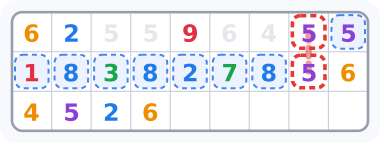
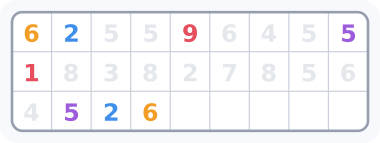
We had a program try every possible move from that point: once those two 5s are gone, this board can no longer be finished without adding numbers. The safe choice is the 5 on the right. A pair that sits side by side in reading order has nothing between it, so it never traps anything. A pair stacked vertically or diagonally jumps over every number in between, and those numbers can end up cut off from their own partners.
Hint 3: The end of a row touches the start of the next
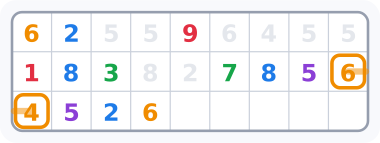
Reading order wraps around, so the last square of a row and the first square of the next one count as side by side. These pairs are just as safe as pairs in the same row, and they are easy to miss because they sit at opposite edges of the board.
Hint 4: Look through cleared squares
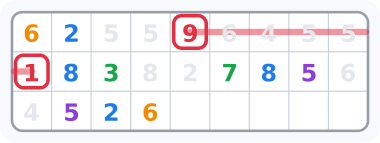
Gray squares do not count, so every pair you clear creates new neighbors. After each move, check the numbers on both sides of the gap you just opened. On this board, the rest of the game is nothing but this hint.
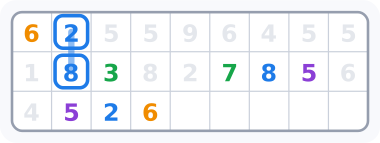
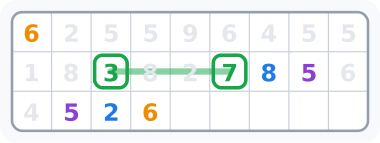
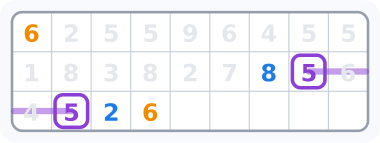
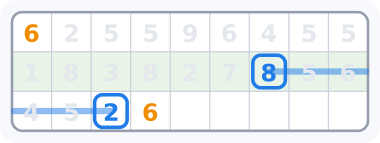
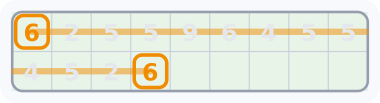
Eleven pairs and not a single ADD. Every pair we took was next to its partner in reading order: in the same row, across a row break, or across gray squares.
How often does the wrong pair hurt?
We ran every Daily Challenge board for 2026 and 2027 through a small program. The boards from the first week of a month have about 24 numbers, and the opening screen shows about 11 pairs you could clear. About 4 of those are risky in the same way as the 5 below the 5. Clearing pairs at random finished only 30% of these boards without adding numbers. Taking only pairs that are side by side in reading order finished every single one.
Habits that help
- Look for colors. Two numbers of the same color always make a pair.
- Clear pairs that sit side by side in reading order: in the same row, across a row break, or across gray squares.
- Think twice before a vertical or diagonal pair. Look at what sits between the two in reading order.
- After each pair, check the new neighbors around the gap.
- Save ADD for when there is truly no pair left.
Next guide
Guides for other puzzles