Hard Ten Link: Count Odd Colors, Clear from the Inside (Daily Challenge 10.22)
 Ten Link The JoyPlus Soft Planning Team
From the 22nd of each month, Daily Challenge boards start full: 54 numbers in six rows. Our program found about 26 clearable pairs on the first screen of these boards, and about 16 of them were traps. Clearing at random finished only 11% of these boards without adding numbers, while taking only reading-order pairs, as in the earlier guides, still finished every one. This guide uses the Daily Challenge for October 22, 2026.
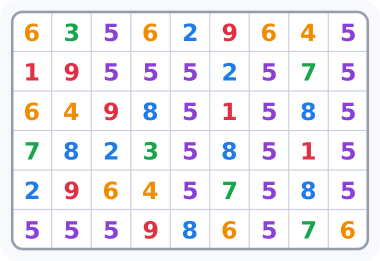
Hint 1: Count the colors in between
On a big board, a vertical pair can have eight or ten numbers between its two squares in reading order, and clearing all of them in your head takes a while. There is a faster test. Count the numbers in between by color, leaving out the color of the pair itself. If any color shows up an odd number of times, the pair is a trap, because an odd group can never pair up among itself.
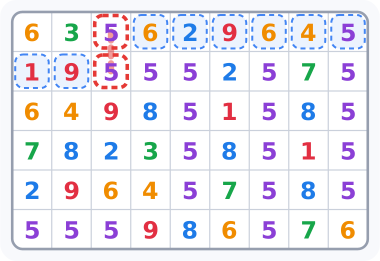
The light bulb only shows a pair you can clear right now. It does not check whether that pair is safe, so test its suggestion like any other vertical or diagonal pair. On boards from the 22nd onward, the first pair the bulb showed was a trap about 7 times out of 10.
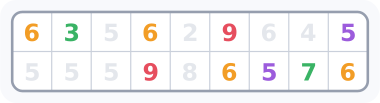
On a board this big, one trap is not always the end. Our program found that a carefully chosen series of other vertical and diagonal pairs could still rescue this board, but those moves are very hard to see. Across all the boards we tested, odd colors gave away 95% of traps and never flagged a safe pair. When every color is even, use the full check from the intermediate guide and clear the gap in your head: about one in five of those pairs is still a trap.
Back to the real game. Start with the pairs that sit side by side.
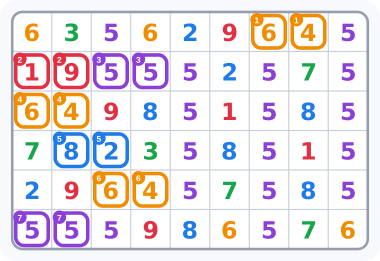
Hint 2: Clear from the inside out
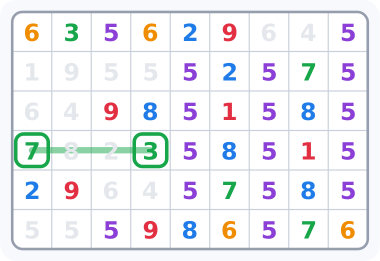
Every pair you clear lets the numbers on either side of it meet. So a pair that looks far apart is often just waiting for the pairs inside it. Think of brackets: you close the innermost one first, then the one around it, and so on outward.
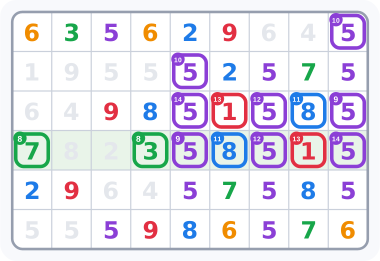
Hint 3: Rows disappear, and far rows meet
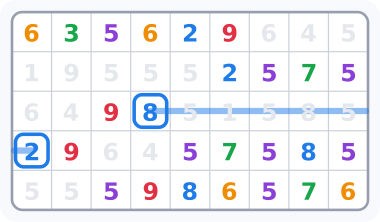
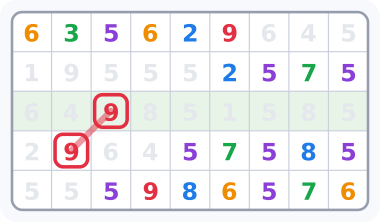
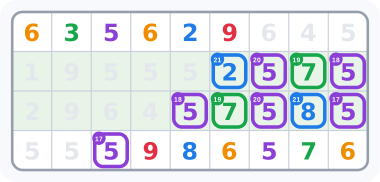
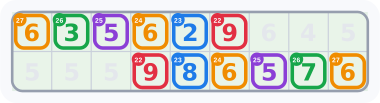
This is the bracket idea on the scale of the whole board. The first row and the last row are the outermost brackets, so they close last. Look at the 5 in the third square of the top row: its real partner was not the 5 the light bulb pointed to, but the 5 in the bottom row, 25 moves later. 27 pairs in total, and no ADD.
Habits for full boards
- Warm up with the pairs that sit side by side. They are always safe.
- Before any vertical or diagonal pair, count the colors in between. An odd count means a trap.
- All counts even? Clear the gap in your head to be sure, or simply wait.
- Test the light bulb suggestion the same way.
- Expect the outer rows to close last. A far-away partner usually just needs the pairs inside it cleared first.
More Ten Link guides
Guides for other puzzles